African Customs Officers Turn to Space Intelligence to Outsmart Smugglers and Terrorists
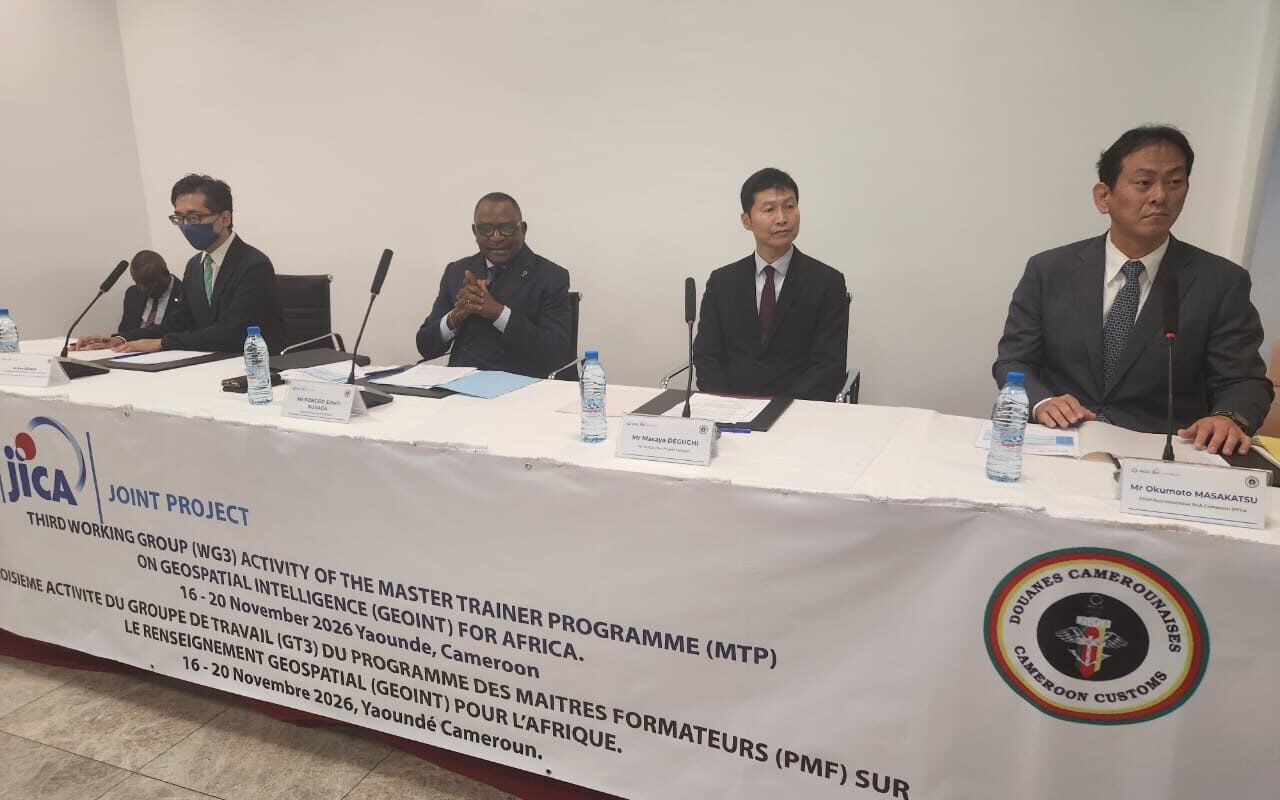
YAOUNDÉ, Cameroon — Twenty-eight senior customs officials from across Africa are gathering in the Cameroonian capital this week to sharpen their skills in satellite imagery and spatial analysis. Running from November 16 to 20, 2026, the intensive program—spearheaded by the World Customs Organization (WCO) and Japan—aims to strip smuggling syndicates and terrorist groups of their advantage across the continent’s vast, porous borders.
Modern border security is no longer confined to physical checkpoints. On Monday, November 16, Cameroon’s Director General of Customs, Fongod Edwin Nuvaga, officially opened the third session of the African Working Group on Geospatial Intelligence (GEOINT) at Yaoundé’s Star Land Hotel.
Building on foundational workshops held earlier this year in Nairobi (February) and Dakar (May), the Yaoundé summit signals a decisive push to modernize African customs enforcement. As criminal networks grow increasingly adept at bypassing main highways to operate in remote, unmonitored « gray zones, » satellite imagery and Geographic Information Systems (GIS) have become vital tools for anticipation and deterrence.
Betting on Technology Transfer
Backed by a strategic partnership between the WCO and the Japan International Cooperation Agency (JICA), the Master Trainers Program is designed for maximum multiplier impact. According to Massaya Deguchi, manager of the joint WCO-JICA project, the goal goes beyond handing over cutting-edge software; it is about building lasting, homegrown technical autonomy across Africa.
To achieve this, Tokyo is providing substantial financial, logistical, and technological backing—a commitment underscored at Monday’s opening ceremony by Okumoto Masakatsu, Chief Representative of JICA’s Cameroon office, alongside Japanese Embassy representative Ken Ozawa. Over the course of the week, eight international specialists from the United States, France, Japan, Uzbekistan, and the Netherlands are mentoring this cohort of African enforcement leaders.
For host nation Cameroon—represented among the trainees by Captain Hugues Amba Bontsebe and Senior Warrant Officer Caeli Ami Ndula—hosting the talks reflects a fundamental institutional shift. Traditionally viewed primarily as revenue collectors, customs administrations are increasingly stepping onto the front lines of national security against illicit trafficking and terrorism.
» At a time when customs administrations are called upon to meet increasingly complex security challenges, skills development, technological innovation, and international cooperation appear more than ever as essential levers for their transformation, » Nuvaga stated.
Addressing delegates from Burkina Faso, Cameroon, Egypt, Ethiopia, Guinea, Kenya, Liberia, Mali, Mauritania, Niger, Senegal, Sierra Leone, Tanzania, and Uganda, the Cameroonian customs chief emphasized their upcoming role as knowledge multipliers. Beyond mastering the tools themselves, these 28 officers will be tasked with standardizing training and rolling out GEOINT capabilities within their respective national agencies.
Charting a Continental Roadmap
Over five days of hands-on sessions, participants are focusing on collecting, cross-referencing, and operationalizing spatial data for targeted risk management. The Yaoundé gathering will conclude on Friday, November 20, with the adoption of a unified continental roadmap—a blueprint meant to permanently embed geospatial intelligence at the heart of Africa’s national border-security strategies.